Showing posts with label portraiture. Show all posts

Tuesday, September 04, 2007

Tips for Portrait Photography & Posing

The portrait market demand reaches enormous levels especially when the requirement is almost every household across the globe in every civilized country. Think about this from another angle - you could target every building and what is more exciting is that repeat business is almost incalculable. Parents love to have family portraits but some like to have it done annually as the children grow. Then they most often like to have a portrait of each child in addition to that. The opportunities become endless.

When it comes to portrait digital photography and photography poses or shall we say, posing for portrait photography, there are many differentials and some of them aren’t obvious. It’s true that while your active organising portrait photography posing with your subject that many new posing ideas will come to mind but you will still need to know the rudimentary basics. Any studio posing will require posing techniques which will vary from posing the female model, baby portrait poses, family portrait poses, wedding photography poses, and even senior portrait poses. They all vary in their portrait pose requirements.

Photography poses are very strenuous on the model or subject as well and there is usually a photography posing guide or a model posing guide that can help your understanding with these areas. Fatigue and restlessness must be considered at long shoots for instance while models are posing for portraits. I recently saw an article that was a guide to posing the female body; however it was too focussed on the one aspect and left little room for photography posing of other types.

The rest of this article offers some posing tips for a photography pose in general and is compiled to stimulate your interest in portrait posing because once you have the basics, your portrait posing skills will compound with each new sitting. To photograph a pose and make it look natural and interesting is what your goal should be with posing. Remember not to treat portrait poses lightly and you will get much better at this skill in a short space of time.

Portrait photography is also a photography business that can be initiated from home. Often only requiring modest photography equipment , you’ll only need several pieces of cloth (backdrop), a camera, some good lenses, two or maybe three lights and let’s not forget the tripod. In addition to the equipment being modest by any ones standards, it is all reasonably lightweight and easy to handle should you need to work outdoors.

The most important rule to remember is that it is a portrait, not necessarily of just the head, but the person, or group is the focal part of the picture, so it is important to take the photograph without any extraneous clutter. Because you will always be dealing with people with whom you have to maintain control, not as a tyrant, but you have to guide your subjects. Therefore a certain degree of self-confidence is necessary. If you are taking a formal portrait of a group of children it is necessary for you as the photographer to ensure that none of the children are making faces.

This brings us to posing. Many photographers underate this essential requirement because posing will make or break your portraiture. There is much value in learning to guide people through various poses. Posing has an ongoing education requirement depending on age, gender, culture, promotion, product, and emotion needed for each piece of art etc. It is such an important and extensive subject that I’ve provided you with this downloadable guide which I think you should take seriously - Make Camera Friendly Posing Happen!

When you have signed up a person for a photographic portrait take a few extra shots, and offer them as wallet or purse photographs at a smaller fee. You already have started the business, capitalise on it, few people can resist the feeling that they have got “something for nothing”. This may seem a waste of time; they can be important additives for your portfolio.

Portrait photography has undergone many changes of style since the introduction of the formal portrait. The modern emphasis is to bring out each individual’s personality. Top glamour models are paid enormous fees to express a distinctive personality, but to bring that aspect forward in your subject is as much about people skills as camera techniques. It is imperative to be able to create a rapport with your subject to bring out the expressions that display their personality. Anyone over the age of two can pose for the camera, with a vacuous expression, but the secret of saleable portrait photography is capturing more than the pose. To be a really good portrait photographer you have to be able to connect with people, if you have not got these skills, then it is better that you concentrate on some other type of photography-perhaps underwater photography if you want to be more active and adventurous

If you want to flatter your subject, you’ll probably want to minimize their nose. Stand about twelve feet from your subject, so that their nose isn’t significantly closer to you than the rest of the face. However, at such a large distance from the camera, if you want to fill the frame with just your subject’s face, then you need a high magnification lens. Typical “portrait” lenses are therefore between 90 and 135 millimeters long when you are using a 35mm camera.

Whilst a lot of portrait photography is completed inside a studio, the prospect of natural light can be very flattering. This can be achieved inside by positioning your subject in front of a window. Environmental portraiture presents different challenges. These portraits are best enlarged, otherwise the subject’s face gets lost in the background. Slow film and the use of a tripod; help to keep your images sharp. There are a number of professional photographers who argue that a portrait is not shown to it’s best advantage when it is clinically sharp and they use a filter, but with modern digital cameras, you can make an adjustment in Photoshop at a later time. However if you are using a digital camera you will achieve the best results with a camera with a true single lens reflex.

Natural light or umbrella lighting can achieve soft lighting; both of these reduce shadows and show the face in a “better more attractive light”. However there is another type of portrait photography, which is high impact photography. This is a very dramatic type of portrait photography, which uses very strong light with a high contrast of tonal color. This technique is more effective indoors, as it is achieved by controlling light, and there is too much light to control out of doors. Position your subject at different angles to the light, from one side, or from underneath. This lengthens the shadows, rather than muting them, and gives a distinctly dramatic effect. You can achieve this in varying degrees, but if the light source is placed at 90 degrees to the face, it will throw the whole of the opposite side of the face in shadow. If you are using a digital camera you can also manipulate the contrast later to achieve a more dramatic effect.

Sunday, May 06, 2007

Shoot Your Own Child's Portrait

How to Work With, Not Against, a Kid's Rowdy Nature


Yes, you can take your own baby, toddler or child's portrait with your digital camera. It can be a challenge to get good pictures of such squirmy subjects, but it can be entertaining and worthwhile for everyone involved (even your child).

I’d like to give you some tips on photographing those little wonders in a way that will allow you and the children to have fun, all the while creating some great photographs and memories.


Get down to their level. Let the photo show the world from the child’s point of view. This also allows for even exposure from the flash on the child's face.

Consider taking "candids," which are non-posed photos. Candids always make great pictures when it comes to children. Don’t let them know that the camera is out. Just watch and wait for them to do something entertaining, which usually doesn’t take too long. This method also shows the child's personality (or a great tantrum shot can also be used as evidence when the future teenager claims they are so well-behaved you should buy that new car for them).


Portraits can sometimes be a grueling task even when photographing adults. Kids can be, well, kids. A couple of things you can do to hopefully help things go smoothly is to let the child pose the way they want. It's more comfortable for them, which in turn will make them happier. No one wants a portrait of their child staring daggers at the camera.


The more you can do before the actual shoot the better. Decide where you want the portraits to be set before you grab the child and the camera. Maybe there is a place your child likes to go. Does he or she have a favorite room in the house or place in the yard? What about a playground? If the child is happy and comfortable in the setting, that will help tremendously.

Do they have a favorite toy you can use as a prop? Maybe the family dog? Allow the child to take part in the building of the portrait. Like I said before, the photo will show what the subject feels and if the child starts to become bored and begins wandering physically or mentally, take a break and come back to it later.


Try to take photos when you will have good natural light. Repeatedly using a flash can make any kid (or adult) grumpy. Be sure you do not have your light source directly behind the child, or the kid will become a mere silhouette. For outdoor shooting, a slightly overcast day is better than noon-day bright sunshine (which creates unpleasant shadows).

Get rid of any clutter in the background, and try to let the child fill as much of the frame as possible. Don't be afraid to take several photos. One great aspect of the digital camera is you can easily delete bad ones, either on the camera itself or on your computer.

The number one tip is to have patience, patience, patience

Thursday, April 12, 2007

Portrait Photography - Part 2

Portraiture

Truly good people pictures seldom happen all by themselves. They take planning. Even casual-looking people pictures are often planned. Some planning is purely technical, such as selecting equipment and lighting. Other planning may include choosing your subject's clothing, hairstyle, pose, and setting.


The hallmark of a portrait is that you take control and leave little to chance. Will a portrait simply be a flattering likeness or a glimpse into your subject's personality? When you know what you want to achieve, everything else should work toward that end: the setting, the clothing, the props, the pose, the lighting, the composition, and so on.
Consider these tips:


Use soft, diffused lighting—such as cloudy-day lighting or indirect window light—to reveal your subject's features in a flattering way.
Keep the background simple to avoid distracting elements, but make it relevant to the portrayal of your subject.


Move in close for an above-the-waist or head-and-shoulders composition; for a less traditional approach, move back to show the entire figure.
Position your camera at or slightly below your subject's eye level.
Pay particular attention to the position of hands and the angle of the head. In a portrait, hands and head can easily look awkward.

Wednesday, April 11, 2007

Portrait Photography - Part 1


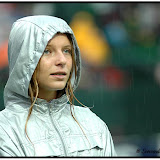
(Photo taken during the Dubai Rugby Seven)


Seeing great pictures of people is the first step toward taking them. If you keep in mind our tried-and-true tips, you'll soon be taking outstanding pictures of the subjects most important to all of us—people in our lives.
When you follow the easy tips outlined here, your people pictures will become the talk of the family.
Groups Portraits
In general it's easier to take group pictures outdoors so if you have a choice, move everybody outside. If this isn't an option, then follow our suggestions for indoor group pictures.


Group Portrait of the Philipines Business Council -Dubai with Phil. Singer Bituin Escalante (in yellow)
Outdoors—Take your straightforward record picture of people arranged in rows. If sunny, position the group so the sun is lighting their faces. If cloudy, no special care is needed.
Consider using a car, a tree, or a swing set as a device for arranging your group.
Have the group strike up varied poses: some looking directly at the camera, others looking to the side; some standing, some holding onto something and leaning.
Try to create two or three different small arrangements within the bigger group. One or two loose triangles of three people each works well.
Use a plain background that doesn't distract from the group.

(Group Portrait of Tag Heuer France)

Indoors
Arrangement of indoor group pictures will be based on using a flash. Its limited range also limits your creativity.
Keep the group inside the maximum flash distance range.
Position the group so they are no more than two rows deep.

Self-portraits
Who knows you better than you? And who will be less embarrassed by you than you? And that's why a self-portrait may be the most fun and creative picture you'll ever take.
Unless you have very long arms, make sure you know how to use your camera's self timer. Or use your camera's close-up mode. Simply hold the camera and point it back at yourself.
If your camera has a zoom lens, use its wide-angle portion.
Be playful with the environment you photograph yourself in. In the car, at work, at the breakfast table, on the phone, or hugging the cat
Decide what you want to say about yourself: serious, introspective, playful, or lonely.


(Note: All The Photo used in this Article are property of the publisher)

PayPal Its Free Sign-up Now!!!

Sign up for PayPal and start accepting credit card payments instantly.